Best Dog Parks Near Me · July 10, 2026
Is My Dog Ready for the Dog Park?
The dog park is treated as a default: you have a dog, dogs need exercise and socialization, therefore the dog park. For a large number of dogs that logic holds and the park is the best part of their week. For a meaningful minority it is a weekly ordeal that makes their behavior worse, and the owners often don't realize until something goes wrong.
None of what follows is a substitute for your veterinarian or a qualified trainer who has met your dog. It's the checklist that most experienced owners run through, and it's worth running through honestly.
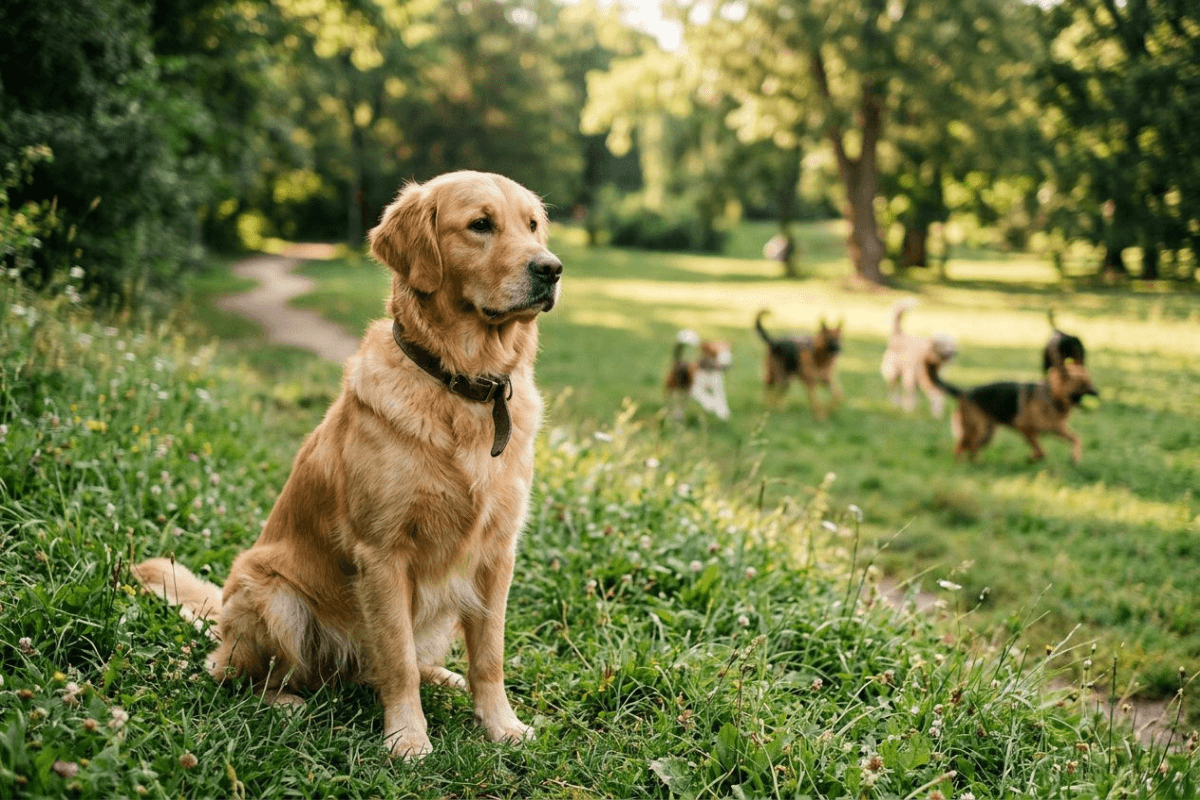
Health and vaccinations come first
A dog park is a shared space with unknown dogs, shared water, and ground that thousands of animals have used. Your vet is the person to ask which vaccinations your dog needs before entering one and when the protection actually takes effect, because the answer depends on your dog's age, history, and where you live.
The general rule that vets give is that puppies should not be in public off-leash spaces until their vaccination series is complete. This is frequently ignored, and it's the single most common health mistake at dog parks. Ask your vet for the date, and don't guess it yourself.
Age: too young and too old
Beyond vaccination timing, very young puppies are poorly served by dog parks even when they're medically cleared. A puppy who is bowled over repeatedly by adult dogs learns that other dogs are frightening, and that lesson is durable. Puppy socialization is best done with known, gentle, appropriately sized dogs, in controlled settings.
At the other end, older dogs with arthritis or reduced hearing and sight are often uncomfortable in a busy park and unable to remove themselves from rough play. A quiet trail serves them better. Many of the parks in this directory carry a Walking trail badge, which for a senior dog is frequently the more valuable feature.
Recall: can you get your dog back?
You don't need perfect obedience. You need to be able to interrupt your dog and bring them to you when play is escalating, before it becomes a fight. If you cannot call your dog off another dog, you cannot manage the only situation in a dog park that genuinely matters.
A useful test, well short of the park: can you call your dog away from an interesting smell in an unfenced field, on a long line, with a stranger's dog walking past? If not, the training comes first. A fenced park removes the road risk, but it does not give you a way to stop an incident.
Temperament: an honest assessment
Some dogs genuinely enjoy meeting unfamiliar dogs. Many are neutral, and would rather sniff the perimeter and go home. Some find it stressful, and a smaller number find it intolerable. All four are normal. Only the first group belongs at a busy dog park.
The signs that a dog is not enjoying themselves are covered in our guide to reading your dog's body language at the park. The short version: a dog who spends the visit hiding behind you, glued to the gate, or patrolling the fence line is not socializing, and going more often will not fix it.
A dog who guards resources, who has a history of fights, or who stiffens and stares at approaching dogs should not be at an off-leash park. This is not a moral failing in the dog. It is a fact about what environments they can succeed in, and taking them anyway puts other people's dogs at risk.
Unspayed and unneutered dogs
Most parks post rules against females in heat, for obvious reasons, and many owners of intact males find their dogs attract unwanted attention regardless of their own behavior. Whether to neuter is a conversation with your vet. Whether to bring a female in heat to a dog park is not: don't.
If the answer is no, what then?
The dog park is one way to exercise a dog, and not the most effective one. A long structured walk, a sniffing walk on a long line, scent games in the house, or a hike on a quiet trail all tire a dog more thoroughly than an hour of chaotic play, and none of them require your dog to negotiate with strangers.
Many dog parks also have quiet hours, typically early morning on weekdays, when a reactive-but-manageable dog can use the space almost alone. Off-peak visits are the compromise that works for a lot of owners, and the park's posted hours plus its reviews usually tell you when those hours are.