Best Dog Parks Near Me · June 1, 2026
Signs Your Dog Is (and Isn't) Having Fun at the Dog Park
Dogs tell you exactly how they're feeling – you just have to know what to look for. Reading your dog's body language at the park is one of the most useful skills you can develop as an owner. It lets you enjoy the sessions that are going well and leave before the ones that aren't get worse.
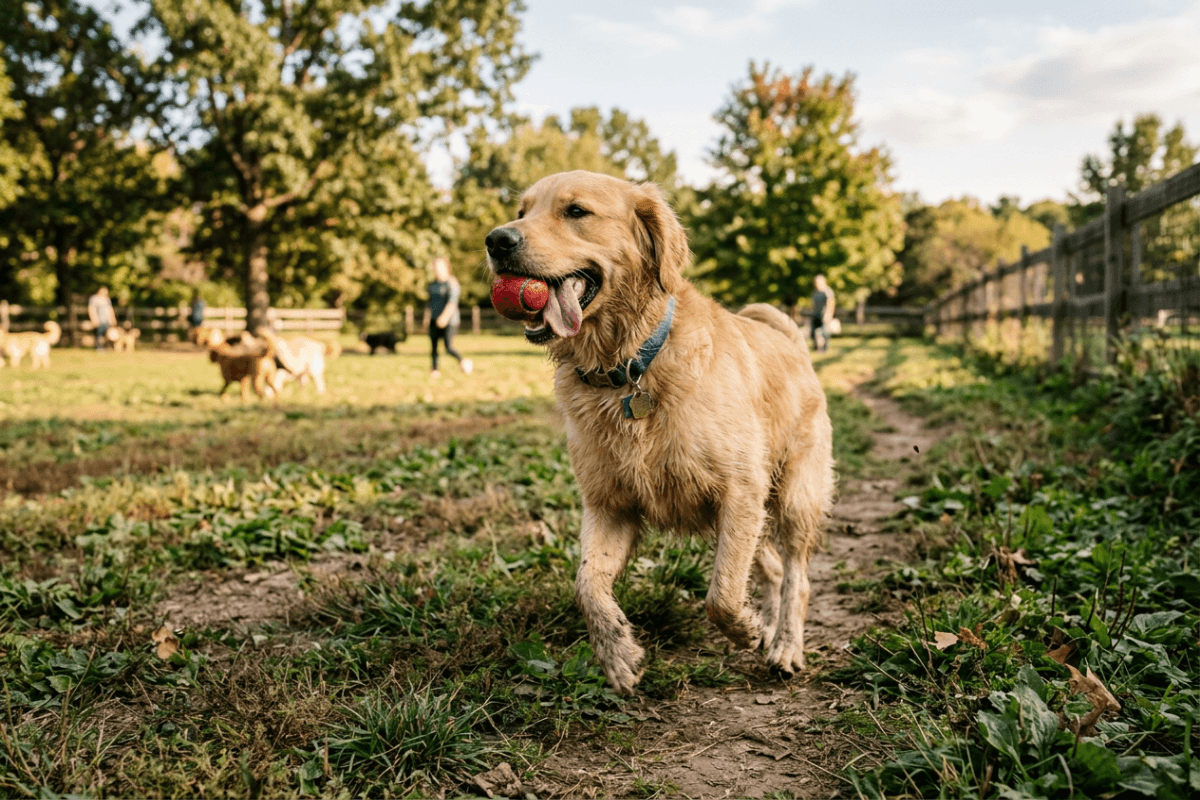
Signs your dog is having a great time
- Loose, wiggly body. Relaxed muscles, no stiffness. The dog looks fluid and bouncy rather than tense and rigid.
- Play bow. Front legs extended forward, rear end up. The universal dog invitation to play – unmistakably positive.
- Zoomies. Those sudden bursts of sprint-in-circles-for-no-apparent-reason. Pure, undiluted joy. If your dog is doing zoomies, they are having the best possible time.
- Voluntary check-ins. A confident, happy dog periodically runs back to their owner and then heads back into the action. It means they feel secure with you as a base.
- Bouncy, indirect approaches. Happy dogs approach new dogs in an arc, not a straight line. A curved approach is polite in dog body language; a straight-line approach can read as a challenge.
Signs your dog is stressed
- Tail tucked or held low. Especially when combined with flattened ears – this is discomfort, not relaxation.
- Repeated lip licking or yawning. Not in response to food or tiredness. Stress yawns happen mid-interaction as a calming signal.
- Whale eye. You can see the whites of their eyes. Usually appears when a dog is tense and doesn't want to move but is tracking something closely.
- Shadowing you. Standing close to your legs without engaging, or returning to you repeatedly and not wanting to go back. Your dog is telling you they want to leave.
- Panting without exertion. Normal panting happens after a run. Panting that starts when a dog hasn't been running, and continues while standing still, is often anxiety.
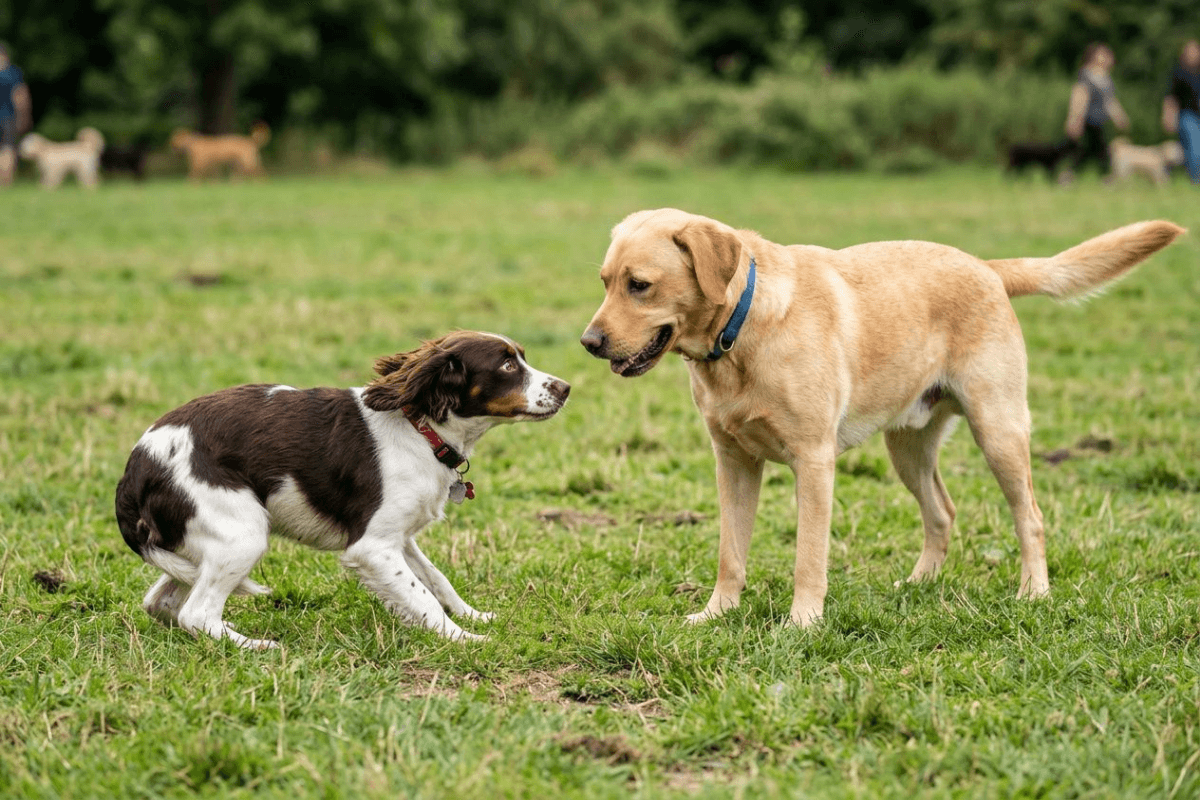
Signs your dog is overstimulated (different from stressed)
- Barking incessantly without a clear target
- Unable to disengage from one dog even when that dog is signaling to stop
- Charging the fence or gate repeatedly
- Humping that continues despite corrections
Overstimulation looks different from stress but is equally a reason to take a break. A short walk outside the park can reset things.
When to leave
If your dog is stressed, leave – not after "a few more minutes to see if they settle." Negative experiences at a dog park build negative associations, and negative associations are much harder to undo than they are to avoid. A short successful session is worth far more than a long stressful one.
If your dog just doesn't like dog parks
That's genuinely fine. Not all dogs are social with unknown dogs, and that preference is not a character flaw or a training failure. Some dogs bond intensely with their person and are perfectly content without the dog park experience. There are plenty of other ways to exercise and enrich a dog's life. The goal is a happy dog – not a dog park dog.