Best Dog Parks Near Me · June 1, 2026
How to Choose the Right Dog Park for Your Dog
The closest dog park isn't always the right dog park. A few features make a significant difference depending on your dog's size, temperament, and recall reliability. Here's what to consider before making it a regular spot.
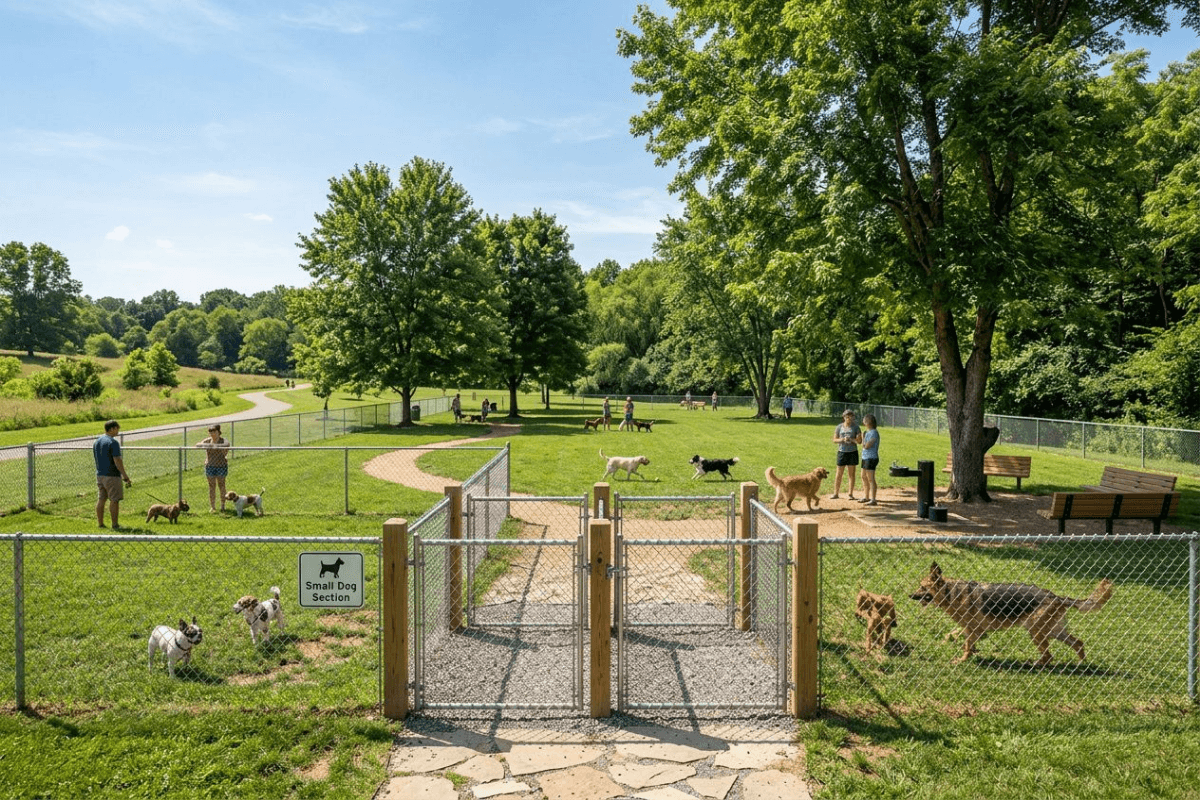
Fenced or not fenced?
For dogs with reliable recall in high-distraction environments, an unfenced or loosely fenced park may work fine. For dogs that bolt – after a squirrel, a bicycle, another dog – a fully enclosed park with a double-gated entry is non-negotiable. This is a safety feature first, not a convenience. When browsing listings, look for the Fenced amenity badge.
Small dog area vs. mixed park
If your dog is under 20 pounds, or if they're timid around large dogs, look for a park with a dedicated small dog section. This isn't about your dog being fragile – it's about physics. Large dogs at play move fast and hit hard, and the impact can injure a small dog even during friendly play. A small dog section makes the experience better for everyone involved.
Surface type
Grass is easiest on joints and paws, drains reasonably well in dry weather, and stays cooler than hard surfaces. Some parks use decomposed granite or gravel, which drains better but can be rough on sensitive paws and heats up significantly in summer sun. Concrete and asphalt are the most durable but the hardest on joints for dogs who run hard. If your dog has joint issues or sensitive paws, it's worth checking what you're working with before the first visit.
Water access
In warm climates and summer months, water access is more than a convenience – it's a safety consideration. Dogs can overheat faster than their owners realize, especially brachycephalic breeds (bulldogs, pugs, boxers) or thick-coated dogs. A park with a water station lets you stay longer and stay safer. Some parks have ponds or creeks where dogs can actually swim, which is a completely different (and thoroughly exhausting) experience. Look for the Water station and Swimming badges.
Park size and density
A large park with fewer dogs is often better than a small park with many. Density increases tension. Dogs that are fine in open spaces sometimes struggle when they feel crowded. If a park consistently feels cramped at its usual hours, try going at off-peak times (early weekday mornings), or look for a larger park nearby.
What visitor reviews tell you
Our listings include ratings and real visitor quotes from Google. For a dog park, pay attention to comments about cleanliness (are owners scooping?), maintenance (grass condition, working gate latches), and the regular crowd. Parks with a consistent, thoughtful regular group are genuinely safer and more enjoyable – and that reputation shows up in reviews.